• Contact info@abtriva.com for inquiries and orders.
  • Chinese (Simplified)

  • English

  • German

  • Korean

  • Spanish

United States (English / $ USD)

Rabbit anti-Human TP53BP2 Polyclonal Antibody

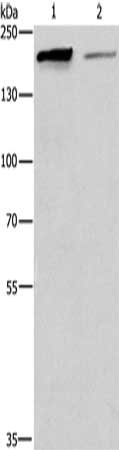
The antibody against TP53BP2 was raised in rabbit using the Fusion protein of Human TP53BP2 as the immunogen. This antibody exists as a non-conjugated isotype IgG, Antigen affinity purified. This antibody has been validated on ELISA, WB, IHC.

ADC-30543A

The antibody against TP53BP2 was raised in rabbit using the Fusion protein of Human TP53BP2 as the immunogen. This antibody exists as a non-conjugated isotype IgG, Antigen affinity purified. This antibody has been validated on ELISA, WB, IHC.

$299.00

Number
Order Exclusive Products Now

Request a Quote
High Purity LevelsPrecision and ReliabilityCustomization Options

Specifications


Cat.No ADC-30543A ClonalityPolyclonal
Host SpeciesRabbitTarget NameTP53BP2
FormLiquidSpecies ReactivityHuman, Mouse
IsotypeIgGStorage Buffer0.05% NaN3, 40% Glycerol., pH7.4 PBS
Purification MethodAntigen affinity purifiedConjugateNon-conjugated
ApplicationELISA, IHC, WBStorageUpon receipt

Immunogen Information


Immunogen DescriptionFusion protein of Human TP53BP2Target SpeciesHuman
Immunogen SequenceComplete sequences for the immunogen, target protein, and peptides are available upon request.Uniprot IDQ13625
Background Information
  • Uniprot Id

    Q13625

  • Target Species

    Human

  • Target Name

    TP53BP2

  • Target Full Name

    Apoptosis-stimulating of p53 protein 2

  • Target Function

    Regulator that plays a central role in regulation of apoptosis and cell growth via its interactions with proteins such as TP53. Regulates TP53 by enhancing the DNA binding and transactivation function of TP53 on the promoters of proapoptotic genes in vivo. Inhibits the ability of NAE1 to conjugate NEDD8 to CUL1, and thereby decreases NAE1 ability to induce apoptosis. Impedes cell cycle progression at G2/M. Its apoptosis-stimulating activity is inhibited by its interaction with DDX42.

  • Target Subcellular Location

    Cytoplasm, perinuclear region. Nucleus. Note=Predominantly found in the perinuclear region. Some small fraction is nuclear. Sequester in the cytoplasm on overexpression of DDX42.

  • Target Protein Families

    ASPP family

  • Target Tissue Specificity

    Widely expressed. Expressed in spleen, thymus, prostate, testis, ovary, small intestine, colon and peripheral blood leukocyte. Reduced expression in breast carcinomas expressing a wild-type TP53 protein. Overexpressed in lung cancer cell lines.

  • Target Synonyms

    53BP2; Apoptosis stimulating of p53 protein 2; Apoptosis stimulating protein of p53 2; Apoptosis-stimulating of p53 protein 2; ASPP2; ASPP2_HUMAN; BBP; Bcl2 binding protein; Bcl2-binding protein; NY REN 51 antigen ; p53 binding protein 2; p53-binding protein 2; p53BP2; PPP1R13A; Renal carcinoma antigen NY-REN-51; Tp53bp2; Tumor protein p53 binding protein 2; Tumor suppressor p53 binding protein 2; Tumor suppressor p53-binding protein 2

  • Target Background

    This gene encodes a member of the ASPP (apoptosis-stimulating protein of p53) family of p53 interacting proteins. The protein contains four ankyrin repeats and an SH3 domain involved in protein-protein interactions. It is localized to the perinuclear region of the cytoplasm, and regulates apoptosis and cell growth through interactions with other regulatory molecules including members of the p53 family. Multiple transcript variants encoding different isoforms have been found for this gene.

Inquire Rabbit anti-Human TP53BP2 Polyclonal Antibody Now


AbTriva respects your privacy and protects your personal data in accordance with AbTriva. For more information, please see our data protection statement. *

Notification