-
Chinese (Simplified)
-
English
-
German
-
Korean
-
Spanish
Chinese (Simplified)
English
German
Korean
Spanish
Sign up for an account to enjoy easy online shopping and instant order tracking.
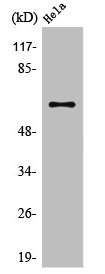
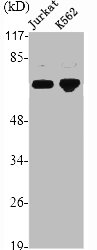
The antibody against TRAF3 was raised in rabbit using the Synthesized peptide derived from the Internal region of Human TRAF3. as the immunogen. This antibody exists as a non-conjugated isotype IgG. The antibody was affinity-purified from rabbit antiserum by affinity-chromatography using epitope-specific immunogen. This antibody has been validated on WB, ELISA.
$167.00
| Cat.No | ADC-37437A | Clonality | Polyclonal |
|---|---|---|---|
| Host Species | Rabbit | Target Name | TRAF3 |
| Form | Liquid | Species Reactivity | Human, Mouse |
| Isotype | IgG | Storage Buffer | 0.5% BSA and 0.02% sodium azide., Liquid in PBS containing 50% glycerol |
| Purification Method | The antibody was affinity-purified from rabbit antiserum by affinity-chromatography using epitope-specific immunogen. | Conjugate | Non-conjugated |
| Application | ELISA, WB | Storage | Upon receipt |
| Immunogen Description | Synthesized peptide derived from the Internal region of Human TRAF3. | Target Species | Human |
|---|---|---|---|
| Immunogen Sequence | Complete sequences for the immunogen, target protein, and peptides are available upon request. | Uniprot ID | Q13114 |
Uniprot Id
Q13114
Target Species
Human
Target Name
TRAF3
Target Full Name
TNF receptor-associated factor 3
Target Function
Regulates pathways leading to the activation of NF-kappa-B and MAP kinases, and plays a central role in the regulation of B-cell survival. Part of signaling pathways leading to the production of cytokines and interferon. Required for normal antibody isotype switching from IgM to IgG. Plays a role T-cell dependent immune responses. Plays a role in the regulation of antiviral responses. Is an essential constituent of several E3 ubiquitin-protein ligase complexes. May have E3 ubiquitin-protein ligase activity and promote 'Lys-63'-linked ubiquitination of target proteins. Inhibits activation of NF-kappa-B in response to LTBR stimulation. Inhibits TRAF2-mediated activation of NF-kappa-B. Down-regulates proteolytic processing of NFKB2, and thereby inhibits non-canonical activation of NF-kappa-B. Promotes ubiquitination and proteasomal degradation of MAP3K14.
Target Involvement
Herpes simplex encephalitis 3 (HSE3)
Target Subcellular Location
Cytoplasm. Endosome. Mitochondrion.
Target Protein Families
TNF receptor-associated factor family, A subfamily
Target Research Area
Cancer, Immunology
Target Synonyms
CAP 1; CAP-1; CAP1 ; CD40 associated protein 1 ; CD40 binding protein ; CD40 bp; CD40 receptor associated factor 1; CD40 receptor-associated factor 1; CD40-binding protein; CD40BP; CRAF 1; CRAF1; IIAE5; LAP 1; LAP1; LMP1 associated protein ; LMP1-associated protein 1; MIPT3; TNF receptor associated factor 3 ; TNF receptor-associated factor 3; TRAF 3; Traf3; TRAF3_HUMAN
Target Background
The protein encoded by this gene is a member of the TNF receptor associated factor (TRAF) protein family. TRAF proteins associate with, and mediate the signal transduction from, members of the TNF receptor (TNFR) superfamily. This protein participates in the signal transduction of CD40, a TNFR family member important for the activation of the immune response. This protein is found to be a critical component of the lymphotoxin-beta receptor (LTbetaR) signaling complex, which induces NF-kappaB activation and cell death initiated by LTbeta ligation. Epstein-Barr virus encoded latent infection membrane protein-1 (LMP1) can interact with this and several other members of the TRAF family, which may be essential for the oncogenic effects of LMP1. The protein also plays a role in the regulation of antiviral response. Mutations in this are associated with Encephalopathy, acute, infection-induced, herpes-specific 5.
Notification