• Contact info@abtriva.com for inquiries and orders.
  • Chinese (Simplified)

  • English

  • German

  • Korean

  • Spanish

United States (English / $ USD)

Rabbit anti-Human TRIM11 Polyclonal Antibody

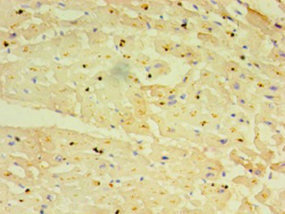
The antibody against TRIM11 was raised in rabbit using the Recombinant Human E3 ubiquitin-protein ligase TRIM11 protein (267-468AA) as the immunogen. This antibody exists as a non-conjugated isotype IgG, purified by protein G with a purity greater than 95%. This antibody has been validated on ELISA, IHC.

ADC-45680A

The antibody against TRIM11 was raised in rabbit using the Recombinant Human E3 ubiquitin-protein ligase TRIM11 protein (267-468AA) as the immunogen. This antibody exists as a non-conjugated isotype IgG, purified by protein G with a purity greater than 95%. This antibody has been validated on ELISA, IHC.

$299.00

Number
Order Exclusive Products Now

Request a Quote
High Purity LevelsPrecision and ReliabilityCustomization Options

Specifications


Cat.No ADC-45680A ClonalityPolyclonal
Host SpeciesRabbitTarget NameTRIM11
FormLiquidSpecies ReactivityHuman
IsotypeIgGStorage Buffer0.01M PBS, 0.03% Proclin 300; Constituents: 50% Glycerol, PH 7.4
Purification Method>95%, Protein G purifiedConjugateNon-conjugated
ApplicationELISA, IHCStorageUpon receipt

Immunogen Information


Immunogen DescriptionRecombinant Human E3 ubiquitin-protein ligase TRIM11 protein (267-468AA)Target SpeciesHuman
Immunogen SequenceComplete sequences for the immunogen, target protein, and peptides are available upon request.Uniprot IDQ96F44
Background Information
  • Uniprot Id

    Q96F44

  • Target Species

    Human

  • Target Name

    TRIM11

  • Target Full Name

    E3 ubiquitin-protein ligase TRIM11

  • Target Function

    E3 ubiquitin-protein ligase that promotes the degradation of insoluble ubiquitinated proteins, including insoluble PAX6, poly-Gln repeat expanded HTT and poly-Ala repeat expanded ARX. Mediates PAX6 ubiquitination leading to proteasomal degradation, thereby modulating cortical neurogenesis. May also inhibit PAX6 transcriptional activity, possibly in part by preventing the binding of PAX6 to its consensus sequences. May contribute to the regulation of the intracellular level of HN (humanin) or HN-containing proteins through the proteasomal degradation pathway. Mediates MED15 ubiquitination leading to proteasomal degradation. May contribute to the innate restriction of retroviruses. Upon overexpression, reduces HIV-1 and murine leukemia virus infectivity, by suppressing viral gene expression. Antiviral activity depends on a functional E3 ubiquitin-protein ligase domain. May regulate TRIM5 turnover via the proteasome pathway, thus counteracting the TRIM5-mediated cross-species restriction of retroviral infection at early stages of the retroviral life cycle.

  • Target Subcellular Location

    Cytoplasm. Nucleus.

  • Target Protein Families

    TRIM/RBCC family

  • Target Tissue Specificity

    Ubiquitous.

  • Target Research Area

    Immunology

  • Target Synonyms

    BIA 1; BIA1; E3 ubiquitin protein ligase TRIM11; E3 ubiquitin-protein ligase TRIM11; Protein BIA1; RING finger protein 92; RING type E3 ubiquitin transferase TRIM11; RNF 92; RNF92; TRI11_HUMAN; Trim 11; TRIM11; Tripartite motif containing 11; tripartite motif protein 11; Tripartite motif-containing protein 11

  • Target Background

    The protein encoded by this gene is a member of the tripartite motif (TRIM) family. The TRIM motif includes three zinc-binding domains, a RING, a B-box type 1 and a B-box type 2, and a coiled-coil region. This protein localizes to the nucleus and the cytoplasm. Its function has not been identified.

Inquire Rabbit anti-Human TRIM11 Polyclonal Antibody Now


AbTriva respects your privacy and protects your personal data in accordance with AbTriva. For more information, please see our data protection statement. *

Notification