• Contact info@abtriva.com for inquiries and orders.
  • Chinese (Simplified)

  • English

  • German

  • Korean

  • Spanish

United States (English / $ USD)

Rabbit anti-Human TRIM39 Polyclonal Antibody

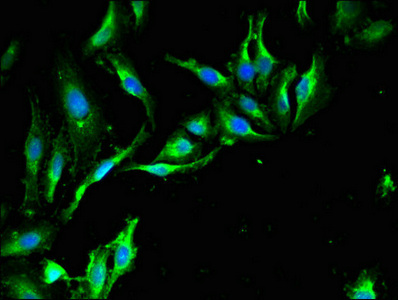
The antibody against TRIM39 was raised in rabbit using the Recombinant Human E3 ubiquitin-protein ligase TRIM39 protein (310-416AA) as the immunogen. This antibody exists as a non-conjugated isotype IgG, purified by protein G with a purity greater than 95%. This antibody has been validated on ELISA, WB, IHC, IF.

ADC-11571A

The antibody against TRIM39 was raised in rabbit using the Recombinant Human E3 ubiquitin-protein ligase TRIM39 protein (310-416AA) as the immunogen. This antibody exists as a non-conjugated isotype IgG, purified by protein G with a purity greater than 95%. This antibody has been validated on ELISA, WB, IHC, IF.

$299.00

Number
Order Exclusive Products Now

Request a Quote
High Purity LevelsPrecision and ReliabilityCustomization Options

Specifications


Cat.No ADC-11571A ClonalityPolyclonal
Host SpeciesRabbitTarget NameTRIM39
FormLiquidSpecies ReactivityHuman, Mouse
IsotypeIgGStorage Buffer0.01M PBS, 0.03% Proclin 300; Constituents: 50% Glycerol, PH 7.4
Purification Method>95%, Protein G purifiedConjugateNon-conjugated
ApplicationELISA, IF, IHC, WBStorageUpon receipt

Immunogen Information


Immunogen DescriptionRecombinant Human E3 ubiquitin-protein ligase TRIM39 protein (310-416AA)Target SpeciesHuman
Immunogen SequenceComplete sequences for the immunogen, target protein, and peptides are available upon request.Uniprot IDQ9HCM9
Background Information
  • Uniprot Id

    Q9HCM9

  • Target Species

    Human

  • Target Name

    TRIM39

  • Target Full Name

    E3 ubiquitin-protein ligase TRIM39

  • Target Function

    E3 ubiquitin-protein ligase. May facilitate apoptosis by inhibiting APC/C-Cdh1-mediated poly-ubiquitination and subsequent proteasome-mediated degradation of the pro-apoptotic protein MOAP1. Regulates the G1/S transition of the cell cycle and DNA damage-induced G2 arrest by stabilizing CDKN1A/p21. Positively regulates CDKN1A/p21 stability by competing with DTL for CDKN1A/p21 binding, therefore disrupting DCX(DTL) E3 ubiquitin ligase complex-mediated CDKN1A/p21 ubiquitination and degradation.; Regulates the G1/S transition of the cell cycle and DNA damage-induced G2 arrest by stabilizing CDKN1A/p21. Positively regulates CDKN1A/p21 stability by competing with DTL for CDKN1A/p21 binding, therefore disrupting DCX(DTL) E3 ubiquitin ligase complex-mediated CDKN1A/p21 ubiquitination and degradation. Negatively regulates the canonical NF-kappa-B signaling pathway via stabilization of CACTIN in an ubiquitination-independent manner.

  • Target Subcellular Location

    [Isoform 1]: Cytoplasm, cytosol. Mitochondrion. Nucleus.; [Isoform 2]: Nucleus.

  • Target Protein Families

    TRIM/RBCC family

  • Target Tissue Specificity

    Ubiquitous; highly expressed in brain, heart, kidney, liver, skeletal muscle, spleen and testis.

  • Target Synonyms

    HGNC:10065; MGC32984; RING finger protein 23; RNF23; Testis abundant finger protein; Testis-abundant finger protein; TFP; TFP RING FINGER PROTEIN 23; TRI39_HUMAN; Trim39; TRIM39B; Tripartite motif containing 39; Tripartite motif-containing protein 39

  • Target Background

    The protein encoded by this gene is a member of the tripartite motif (TRIM) family. The TRIM motif includes three zinc-binding domains, a RING, a B-box type 1 and a B-box type 2, and a coiled-coil region. The function of this protein has not been identified. This gene lies within the major histocompatibility complex class I region on chromosome 6. Alternate splicing results in two transcript variants encoding different isoforms.

Inquire Rabbit anti-Human TRIM39 Polyclonal Antibody Now


AbTriva respects your privacy and protects your personal data in accordance with AbTriva. For more information, please see our data protection statement. *

Notification