-
Chinese (Simplified)
-
English
-
German
-
Korean
-
Spanish

Chinese (Simplified)
English
German
Korean
Spanish
Sign up for an account to enjoy easy online shopping and instant order tracking.
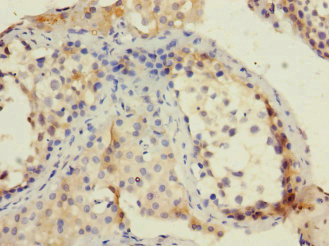
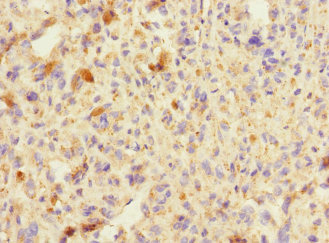
The antibody against TRIP12 was raised in rabbit using the Recombinant Human E3 ubiquitin-protein ligase TRIP12 protein (1-240AA) as the immunogen. This antibody exists as a non-conjugated isotype IgG, Antigen affinity purified. This antibody has been validated on ELISA, IHC.
$299.00
| Cat.No | ADC-16518A | Clonality | Polyclonal |
|---|---|---|---|
| Host Species | Rabbit | Target Name | TRIP12 |
| Form | Liquid | Species Reactivity | Human |
| Isotype | IgG | Storage Buffer | 50% Glycerol, PBS with 0.02% sodium azide, pH7.3. |
| Purification Method | Antigen affinity purified | Conjugate | Non-conjugated |
| Application | ELISA, IHC | Storage | Upon receipt |
| Immunogen Description | Recombinant Human E3 ubiquitin-protein ligase TRIP12 protein (1-240AA) | Target Species | Human |
|---|---|---|---|
| Immunogen Sequence | Complete sequences for the immunogen, target protein, and peptides are available upon request. | Uniprot ID | Q14669 |
Uniprot Id
Q14669
Target Species
Human
Target Name
TRIP12
Target Full Name
E3 ubiquitin-protein ligase TRIP12
Target Function
E3 ubiquitin-protein ligase involved in ubiquitin fusion degradation (UFD) pathway and regulation of DNA repair. Part of the ubiquitin fusion degradation (UFD) pathway, a process that mediates ubiquitination of protein at their N-terminus, regardless of the presence of lysine residues in target proteins. Acts as a key regulator of DNA damage response by acting as a suppressor of RNF168, an E3 ubiquitin-protein ligase that promotes accumulation of 'Lys-63'-linked histone H2A and H2AX at DNA damage sites, thereby acting as a guard against excessive spreading of ubiquitinated chromatin at damaged chromosomes. In normal cells, mediates ubiquitination and degradation of isoform p19ARF/ARF of CDKN2A, a lysine-less tumor suppressor required for p53/TP53 activation under oncogenic stress. In cancer cells, however, isoform p19ARF/ARF and TRIP12 are located in different cell compartments, preventing isoform p19ARF/ARF ubiquitination and degradation. Does not mediate ubiquitination of isoform p16-INK4a of CDKN2A. Also catalyzes ubiquitination of NAE1 and SMARCE1, leading to their degradation. Ubiquitination and degradation of target proteins is regulated by interaction with proteins such as MYC, TRADD or SMARCC1, which disrupt the interaction between TRIP12 and target proteins. Mediates ubiquitination of ASXL1: following binding to N(6)-methyladenosine methylated DNA, ASXL1 is ubiquitinated by TRIP12, leading to its degradation and subsequent inactivation of the PR-DUB complex.
Target Subcellular Location
Nucleus, nucleoplasm.
Target Protein Families
UPL family, K-HECT subfamily
Target Research Area
Epigenetics and Nuclear Signaling
Target Synonyms
TRIP12; KIAA0045; ULF; E3 ubiquitin-protein ligase TRIP12; EC 2.3.2.26; E3 ubiquitin-protein ligase for Arf; ULF; HECT-type E3 ubiquitin transferase TRIP12; Thyroid receptor-interacting protein 12; TR-interacting protein 12; TRIP-12
Target Background
The protein encoded by this gene is an E3 ubiquitin-protein ligase involved in the degradation of the p19ARF/ARF isoform of CDKN2A, a tumor suppressor. The encoded protein also plays a role in the DNA damage response by regulating the stability of USP7, which regulates tumor suppressor p53.
Notification