-
Chinese (Simplified)
-
English
-
German
-
Korean
-
Spanish
Chinese (Simplified)
English
German
Korean
Spanish
Sign up for an account to enjoy easy online shopping and instant order tracking.
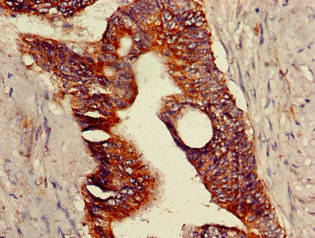
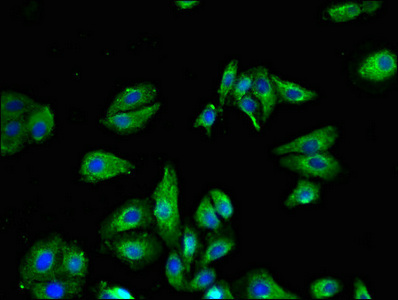
The antibody against TRPV1 was raised in rabbit using the Recombinant Human Transient receptor potential cation channel subfamily V member 1 protein (1-155AA) as the immunogen. This antibody exists as a non-conjugated isotype IgG, purified by protein G with a purity greater than 95%. This antibody has been validated on ELISA, IHC, IF.
$299.00
| Cat.No | ADC-11762A | Clonality | Polyclonal |
|---|---|---|---|
| Host Species | Rabbit | Target Name | TRPV1 |
| Form | Liquid | Species Reactivity | Human |
| Isotype | IgG | Storage Buffer | 0.01M PBS, 0.03% Proclin 300; Constituents: 50% Glycerol, PH 7.4 |
| Purification Method | >95%, Protein G purified | Conjugate | Non-conjugated |
| Application | ELISA, IF, IHC | Storage | Upon receipt |
| Immunogen Description | Recombinant Human Transient receptor potential cation channel subfamily V member 1 protein (1-155AA) | Target Species | Human |
|---|---|---|---|
| Immunogen Sequence | Complete sequences for the immunogen, target protein, and peptides are available upon request. | Uniprot ID | Q8NER1 |
Uniprot Id
Q8NER1
Target Species
Human
Target Name
TRPV1
Target Full Name
Transient receptor potential cation channel subfamily V member 1
Target Function
Ligand-activated non-selective calcium permeant cation channel involved in detection of noxious chemical and thermal stimuli. Seems to mediate proton influx and may be involved in intracellular acidosis in nociceptive neurons. Involved in mediation of inflammatory pain and hyperalgesia. Sensitized by a phosphatidylinositol second messenger system activated by receptor tyrosine kinases, which involves PKC isozymes and PCL. Activation by vanilloids, like capsaicin, and temperatures higher than 42 degrees Celsius, exhibits a time- and Ca(2+)-dependent outward rectification, followed by a long-lasting refractory state. Mild extracellular acidic pH (6.5) potentiates channel activation by noxious heat and vanilloids, whereas acidic conditions (pH <6) directly activate the channel. Can be activated by endogenous compounds, including 12-hydroperoxytetraenoic acid and bradykinin. Acts as ionotropic endocannabinoid receptor with central neuromodulatory effects. Triggers a form of long-term depression (TRPV1-LTD) mediated by the endocannabinoid anandamine in the hippocampus and nucleus accumbens by affecting AMPA receptors endocytosis.
Target Subcellular Location
Cell junction, synapse, postsynaptic cell membrane; Multi-pass membrane protein. Cell projection, dendritic spine membrane; Multi-pass membrane protein. Cell membrane; Multi-pass membrane protein.
Target Protein Families
Transient receptor (TC 1.A.4) family, TrpV subfamily, TRPV1 sub-subfamily
Target Tissue Specificity
Widely expressed at low levels. Expression is elevated in dorsal root ganglia. In skin, expressed in cutaneous sensory nerve fibers, mast cells, epidermal keratinocytes, dermal blood vessels, the inner root sheet and the infundibulum of hair follicles, di
Target Research Area
Neuroscience
Target Synonyms
Capsaicin receptor; DKFZp434K0220; osm 9 like TRP channel 1; Osm-9-like TRP channel 1; OTRPC1; Transient receptor potential cation channel subfamily V member 1; TRPV 1; Trpv1; TRPV1_HUMAN; Vanilloid receptor 1; Vanilloid receptor subtype 1; VR 1; VR1
Target Background
Capsaicin, the main pungent ingredient in hot chili peppers, elicits a sensation of burning pain by selectively activating sensory neurons that convey information about noxious stimuli to the central nervous system. The protein encoded by this gene is a receptor for capsaicin and is a non-selective cation channel that is structurally related to members of the TRP family of ion channels. This receptor is also activated by increases in temperature in the noxious range, suggesting that it functions as a transducer of painful thermal stimuli in vivo. Four transcript variants encoding the same protein, but with different 5' UTR sequence, have been described for this gene.
Notification