• Contact info@abtriva.com for inquiries and orders.
  • Chinese (Simplified)

  • English

  • German

  • Korean

  • Spanish

United States (English / $ USD)

Rabbit anti-Human TSC1 Polyclonal Antibody

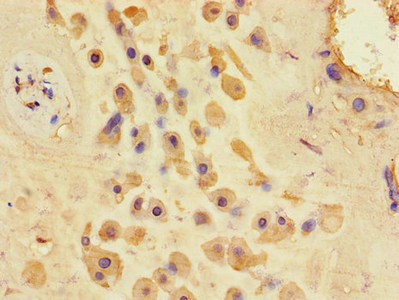
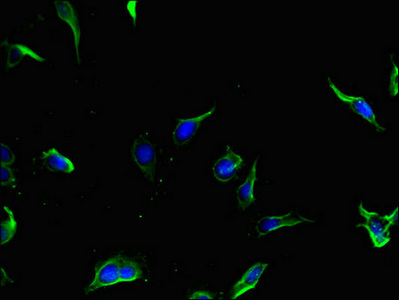
The antibody against TSC1 was raised in rabbit using the Recombinant Human Hamartin protein (101-344AA) as the immunogen. This antibody exists as a non-conjugated isotype IgG, purified by protein G with a purity greater than 95%. This antibody has been validated on ELISA, IHC, IF.

ADC-14238A

The antibody against TSC1 was raised in rabbit using the Recombinant Human Hamartin protein (101-344AA) as the immunogen. This antibody exists as a non-conjugated isotype IgG, purified by protein G with a purity greater than 95%. This antibody has been validated on ELISA, IHC, IF.

$299.00

Number
Order Exclusive Products Now

Request a Quote
High Purity LevelsPrecision and ReliabilityCustomization Options

Specifications


Cat.No ADC-14238A ClonalityPolyclonal
Host SpeciesRabbitTarget NameTSC1
FormLiquidSpecies ReactivityHuman
IsotypeIgGStorage Buffer0.01M PBS, 0.03% Proclin 300; Constituents: 50% Glycerol, PH 7.4
Purification Method>95%, Protein G purifiedConjugateNon-conjugated
ApplicationELISA, IF, IHCStorageUpon receipt

Immunogen Information


Immunogen DescriptionRecombinant Human Hamartin protein (101-344AA)Target SpeciesHuman
Immunogen SequenceComplete sequences for the immunogen, target protein, and peptides are available upon request.Uniprot IDQ92574
Background Information
  • Uniprot Id

    Q92574

  • Target Species

    Human

  • Target Name

    TSC1

  • Target Full Name

    Hamartin

  • Target Function

    In complex with TSC2, inhibits the nutrient-mediated or growth factor-stimulated phosphorylation of S6K1 and EIF4EBP1 by negatively regulating mTORC1 signaling. Seems not to be required for TSC2 GAP activity towards RHEB. Implicated as a tumor suppressor. Involved in microtubule-mediated protein transport, but this seems to be due to unregulated mTOR signaling. Acts as a co-chaperone for HSP90AA1 facilitating HSP90AA1 chaperoning of protein clients such as kinases, TSC2 and glucocorticoid receptor NR3C1. Increases ATP binding to HSP90AA1 and inhibits HSP90AA1 ATPase activity. Competes with the activating co-chaperone AHSA1 for binding to HSP90AA1, thereby providing a reciprocal regulatory mechanism for chaperoning of client proteins. Recruits TSC2 to HSP90AA1 and stabilizes TSC2 by preventing the interaction between TSC2 and ubiquitin ligase HERC1.

  • Target Involvement

    Tuberous sclerosis 1 (TSC1); Lymphangioleiomyomatosis (LAM); Focal cortical dysplasia 2 (FCORD2)

  • Target Subcellular Location

    Cytoplasm. Membrane; Peripheral membrane protein.

  • Target Tissue Specificity

    Highly expressed in skeletal muscle, followed by heart, brain, placenta, pancreas, lung, liver and kidney. Also expressed in embryonic kidney cells.

  • Target Research Area

    Cancer

  • Target Synonyms

    Hamartin; kiaa0243; LAM; TSC; Tsc1; Tsc1 gene; TSC1_HUMAN; Tuberous sclerosis 1; Tuberous sclerosis 1 protein; tumor suppressor

  • Target Background

    This gene is a tumor suppressor gene that encodes the growth inhibitory protein hamartin. The encoded protein interacts with and stabilizes the GTPase activating protein tuberin. This hamartin-tuberin complex negatively regulates mammalian target of rapamycin complex 1 (mTORC1) signaling which is a major regulator of anabolic cell growth. This protein also functions as a co-chaperone for Hsp90 that inhibits its ATPase activity. This protein functions as a facilitator of Hsp90-mediated folding of kinase and non-kinase clients, including TSC2 and thereby preventing their ubiquitination and proteasomal degradation. Mutations in this gene have been associated with tuberous sclerosis and lymphangioleiomyomatosis.

Inquire Rabbit anti-Human TSC1 Polyclonal Antibody Now


AbTriva respects your privacy and protects your personal data in accordance with AbTriva. For more information, please see our data protection statement. *

Notification