• Contact info@abtriva.com for inquiries and orders.
  • Chinese (Simplified)

  • English

  • German

  • Korean

  • Spanish

United States (English / $ USD)

Mouse anti-Human TSG101 Monoclonal antibody

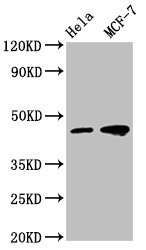
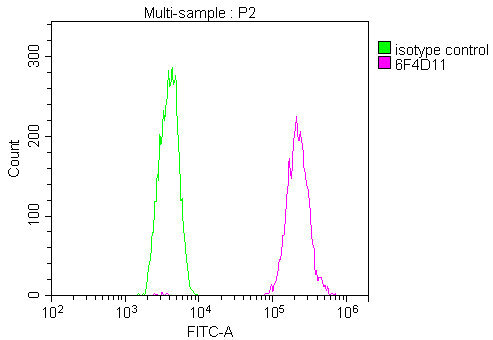
The antibody against TSG101 was raised in mouse using the Recombinant Human TSG101 protein (1-145AA) as the immunogen. This antibody exists as a non-conjugated isotype IgG1, purified by protein G with a purity greater than 95%. This antibody has been validated on ELISA, WB, IF, FC.

ADC-56085A

The antibody against TSG101 was raised in mouse using the Recombinant Human TSG101 protein (1-145AA) as the immunogen. This antibody exists as a non-conjugated isotype IgG1, purified by protein G with a purity greater than 95%. This antibody has been validated on ELISA, WB, IF, FC.

$350.00

Number
Order Exclusive Products Now

Request a Quote
High Purity LevelsPrecision and ReliabilityCustomization Options

Specifications


Cat.No ADC-56085A ClonalityMonoclonal
Host SpeciesMouseTarget NameTSG101
FormLiquidSpecies ReactivityHuman
IsotypeIgG1Storage Buffer0.01M PBS, 0.03% Proclin 300; Constituents: 50% Glycerol, PH 7.4
Purification Method>95%, Protein G purifiedConjugateNon-conjugated
ApplicationELISA, IF, WB, FCStorageUpon receipt

Immunogen Information


Immunogen DescriptionRecombinant Human TSG101 protein (1-145AA)Target SpeciesHuman
Immunogen SequenceComplete sequences for the immunogen, target protein, and peptides are available upon request.Uniprot IDQ99816
Background Information
  • Uniprot Id

    Q99816

  • Target Species

    Human

  • Target Name

    TSG101

  • Target Full Name

    Tumor susceptibility gene 101 protein

  • Target Function

    Component of the ESCRT-I complex, a regulator of vesicular trafficking process. Binds to ubiquitinated cargo proteins and is required for the sorting of endocytic ubiquitinated cargos into multivesicular bodies (MVBs). Mediates the association between the ESCRT-0 and ESCRT-I complex. Required for completion of cytokinesis; the function requires CEP55. May be involved in cell growth and differentiation. Acts as a negative growth regulator. Involved in the budding of many viruses through an interaction with viral proteins that contain a late-budding motif P-[ST]-A-P. This interaction is essential for viral particle budding of numerous retroviruses. Required for the exosomal release of SDCBP, CD63 and syndecan. It may also play a role in the extracellular release of microvesicles that differ from the exosomes.

  • Target Subcellular Location

    Cytoplasm. Early endosome membrane; Peripheral membrane protein; Cytoplasmic side. Late endosome membrane; Peripheral membrane protein. Cytoplasm, cytoskeleton, microtubule organizing center, centrosome. Midbody, Midbody ring. Nucleus.

  • Target Protein Families

    Ubiquitin-conjugating enzyme family, UEV subfamily

  • Target Tissue Specificity

    Heart, brain, placenta, lung, liver, skeletal, kidney and pancreas.

  • Target Research Area

    Others

  • Target Synonyms

    ESCRT I complex subunit TSG101; ESCRT-I complex subunit TSG101; TS101_HUMAN; TSG 10; TSG 101; TSG10; Tsg101; Tumor susceptibility 101; Tumor susceptibility gene 10; Tumor susceptibility gene 101; Tumor susceptibility gene 101 protein; Tumor susceptibility protein; Tumor susceptibility protein isoform 3; VPS 23; VPS23

  • Target Background

    The protein encoded by this gene belongs to a group of apparently inactive homologs of ubiquitin-conjugating enzymes. The gene product contains a coiled-coil domain that interacts with stathmin, a cytosolic phosphoprotein implicated in tumorigenesis. The protein may play a role in cell growth and differentiation and act as a negative growth regulator. In vitro steady-state expression of this tumor susceptibility gene appears to be important for maintenance of genomic stability and cell cycle regulation. Mutations and alternative splicing in this gene occur in high frequency in breast cancer and suggest that defects occur during breast cancer tumorigenesis and/or progression.

Inquire Mouse anti-Human TSG101 Monoclonal antibody Now


AbTriva respects your privacy and protects your personal data in accordance with AbTriva. For more information, please see our data protection statement. *

Notification