-
Chinese (Simplified)
-
English
-
German
-
Korean
-
Spanish
Chinese (Simplified)
English
German
Korean
Spanish
Sign up for an account to enjoy easy online shopping and instant order tracking.
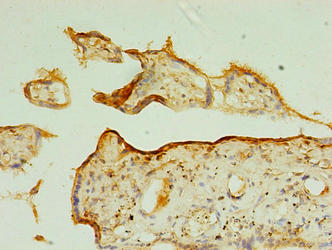
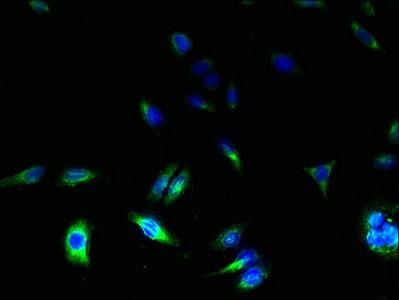
The antibody against TSPAN31 was raised in rabbit using the Recombinant Human Tetraspanin-31 protein (94-173AA) as the immunogen. This antibody exists as a non-conjugated isotype IgG, purified by protein G with a purity greater than 95%. This antibody has been validated on ELISA, IHC, IF.
$299.00
| Cat.No | ADC-32688A | Clonality | Polyclonal |
|---|---|---|---|
| Host Species | Rabbit | Target Name | TSPAN31 |
| Target Synonyms | TSPAN31; SAS; Tetraspanin-31; Tspan-31; Sarcoma-amplified sequence | Form | Liquid |
| Species Reactivity | Human | Isotype | IgG |
| Storage Buffer | 0.01M PBS, 0.03% Proclin 300; Constituents: 50% Glycerol, PH 7.4 | Purification Method | >95%, Protein G purified |
| Conjugate | Non-conjugated | Application | ELISA, IF, IHC |
| Storage | Upon receipt |
| Immunogen Description | Recombinant Human Tetraspanin-31 protein (94-173AA) | Target Species | Human |
|---|---|---|---|
| Immunogen Sequence | Complete sequences for the immunogen, target protein, and peptides are available upon request. | Uniprot ID | Q12999 |
Uniprot Id
Q12999
Target Species
Human
Target Name
TSPAN31
Target Full Name
Tetraspanin-31
Target Subcellular Location
Membrane; Multi-pass membrane protein.
Target Protein Families
Tetraspanin (TM4SF) family
Target Synonyms
TSPAN31; SAS; Tetraspanin-31; Tspan-31; Sarcoma-amplified sequence
Target Background
The protein encoded by this gene is a member of the transmembrane 4 superfamily, also known as the tetraspanin family. Most of these members are cell-surface proteins that are characterized by the presence of four hydrophobic domains. The proteins mediate signal transduction events that play a role in the regulation of cell development, activation, growth and motility. This encoded protein is thought to be involved in growth-related cellular processes. This gene is associated with tumorigenesis and osteosarcoma.
Notification