-
Chinese (Simplified)
-
English
-
German
-
Korean
-
Spanish
Chinese (Simplified)
English
German
Korean
Spanish
Sign up for an account to enjoy easy online shopping and instant order tracking.
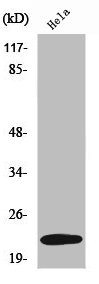
The antibody against UBE2T was raised in rabbit using the Synthesized peptide derived from the Internal region of Human UBE2T. as the immunogen. This antibody exists as a non-conjugated isotype IgG. The antibody was affinity-purified from rabbit antiserum by affinity-chromatography using epitope-specific immunogen. This antibody has been validated on WB, ELISA.
$167.00
| Cat.No | ADC-37406A | Clonality | Polyclonal |
|---|---|---|---|
| Host Species | Rabbit | Target Name | UBE2T |
| Form | Liquid | Species Reactivity | Human, Mouse |
| Isotype | IgG | Storage Buffer | 0.5% BSA and 0.02% sodium azide., Liquid in PBS containing 50% glycerol |
| Purification Method | The antibody was affinity-purified from rabbit antiserum by affinity-chromatography using epitope-specific immunogen. | Conjugate | Non-conjugated |
| Application | ELISA, WB | Storage | Upon receipt |
| Immunogen Description | Synthesized peptide derived from the Internal region of Human UBE2T. | Target Species | Human |
|---|---|---|---|
| Immunogen Sequence | Complete sequences for the immunogen, target protein, and peptides are available upon request. | Uniprot ID | Q9NPD8 |
Uniprot Id
Q9NPD8
Target Species
Human
Target Name
UBE2T
Target Full Name
Ubiquitin-conjugating enzyme E2 T
Target Function
Accepts ubiquitin from the E1 complex and catalyzes its covalent attachment to other proteins. Catalyzes monoubiquitination. Involved in mitomycin-C (MMC)-induced DNA repair. Acts as a specific E2 ubiquitin-conjugating enzyme for the Fanconi anemia complex by associating with E3 ubiquitin-protein ligase FANCL and catalyzing monoubiquitination of FANCD2, a key step in the DNA damage pathway. Also mediates monoubiquitination of FANCL and FANCI. May contribute to ubiquitination and degradation of BRCA1. In vitro able to promote polyubiquitination using all 7 ubiquitin Lys residues, but may prefer 'Lys-11'-, 'Lys-27'-, 'Lys-48'- and 'Lys-63'-linked polyubiquitination.
Target Involvement
Fanconi anemia complementation group T (FANCT)
Target Subcellular Location
Nucleus. Note=Accumulates to chromatin.
Target Protein Families
Ubiquitin-conjugating enzyme family
Target Synonyms
Cell proliferation inducing gene 50 protein; Cell proliferation-inducing gene 50 protein; HSPC150; HSPC150 protein similar to ubiquitin conjugating enzyme; PIG50; Ube2t; UBE2T_HUMAN; Ubiquitin carrier protein T; Ubiquitin conjugating enzyme; ubiquitin conjugating enzyme E2 T; Ubiquitin conjugating enzyme E2T; Ubiquitin protein ligase T; Ubiquitin-conjugating enzyme E2 T; Ubiquitin-protein ligase T
Target Background
The protein encoded by this gene catalyzes the covalent attachment of ubiquitin to protein substrates. Defects in this gene have been associated with Fanconi anemia of complementation group T. Two transcript variants encoding different isoforms have been found for this gene.
Notification