• Contact info@abtriva.com for inquiries and orders.
  • Chinese (Simplified)

  • English

  • German

  • Korean

  • Spanish

United States (English / $ USD)

Rabbit anti-Human UBR5 Polyclonal Antibody

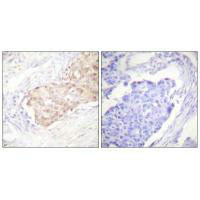
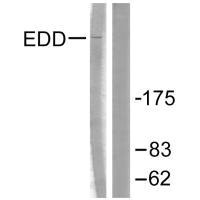
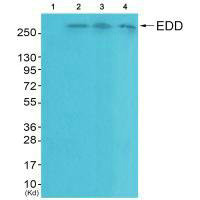
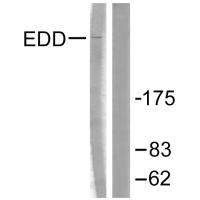
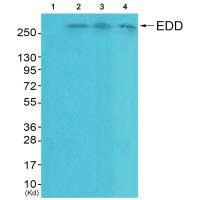
The antibody against UBR5 was raised in rabbit using the Synthesized peptide derived from Internal of Human EDD. as the immunogen. The antibody was affinity-purified from rabbit antiserum by affinity-chromatography using epitope-specific immunogen. This antibody has been validated on ELISA, WB, IHC.

ADC-42298A

The antibody against UBR5 was raised in rabbit using the Synthesized peptide derived from Internal of Human EDD. as the immunogen. The antibody was affinity-purified from rabbit antiserum by affinity-chromatography using epitope-specific immunogen. This antibody has been validated on ELISA, WB, IHC.

$297.00

Number
Order Exclusive Products Now

Request a Quote
High Purity LevelsPrecision and ReliabilityCustomization Options

Specifications


Cat.No ADC-42298A ClonalityPolyclonal
Host SpeciesRabbitTarget NameUBR5
Target Synonyms4432411E13Rik antibody; AW549941 antibody; C77315 antibody; D030042K14 antibody; DD5 antibody; E3 identified by differential display antibody; E3 ubiquitin protein ligase, Drosophila, HECT domain containingFormLiquid
Species ReactivityHuman, MouseStorage BufferPH 7.4, 0.02% sodium azide and 50% glycerol., 150mM NaCl, Rabbit IgG in phosphate buffered saline (without Mg2+ and Ca2+)
Purification MethodThe antibody was affinity-purified from rabbit antiserum by affinity-chromatography using epitope-specific immunogen.ApplicationELISA, IHC, WB
StorageUpon receipt

Immunogen Information


Immunogen DescriptionSynthesized peptide derived from Internal of Human EDD.Target SpeciesHuman
Immunogen SequenceComplete sequences for the immunogen, target protein, and peptides are available upon request.Uniprot IDO95071
Background Information
  • Uniprot Id

    O95071

  • Target Species

    Human

  • Target Name

    UBR5

  • Target Full Name

    E3 ubiquitin-protein ligase UBR5

  • Target Function

    E3 ubiquitin-protein ligase which is a component of the N-end rule pathway. Recognizes and binds to proteins bearing specific N-terminal residues that are destabilizing according to the N-end rule, leading to their ubiquitination and subsequent degradation. Involved in maturation and/or transcriptional regulation of mRNA by activating CDK9 by polyubiquitination. May play a role in control of cell cycle progression. May have tumor suppressor function. Regulates DNA topoisomerase II binding protein (TopBP1) in the DNA damage response. Plays an essential role in extraembryonic development. Ubiquitinates acetylated PCK1. Also acts as a regulator of DNA damage response by acting as a suppressor of RNF168, an E3 ubiquitin-protein ligase that promotes accumulation of 'Lys-63'-linked histone H2A and H2AX at DNA damage sites, thereby acting as a guard against excessive spreading of ubiquitinated chromatin at damaged chromosomes.

  • Target Subcellular Location

    Nucleus.

  • Target Tissue Specificity

    Widely expressed. Most abundant in testis and expressed at high levels in brain, pituitary and kidney.

  • Target Synonyms

    4432411E13Rik; AW549941; C77315; D030042K14; DD5; E3 identified by differential display; E3 ubiquitin protein ligase, HECT domain containing, 1; E3 ubiquitin-protein ligase; E3 ubiquitin-protein ligase UBR5; EDD 1; EDD; EDD1; FLJ11310; HECT domain-containing 1; hHYD; HYD; Hyperplastic discs protein homolog; Hyperplastic discs, Drosophila, homolog of; KIAA0896; MGC57263; mKIAA0896; Progestin induced protein; Progestin-induced protein; Rat100; Ubiquitin protein ligase; Ubiquitin protein ligase E3 component n recognin 5; UBR5; UBR5_HUMAN

  • Target Background

    This gene encodes a progestin-induced protein, which belongs to the HECT (homology to E6-AP carboxyl terminus) family. The HECT family proteins function as E3 ubiquitin-protein ligases, targeting specific proteins for ubiquitin-mediated proteolysis. This gene is localized to chromosome 8q22 which is disrupted in a variety of cancers. This gene potentially has a role in regulation of cell proliferation or differentiation.

Inquire Rabbit anti-Human UBR5 Polyclonal Antibody Now


AbTriva respects your privacy and protects your personal data in accordance with AbTriva. For more information, please see our data protection statement. *

Notification