• Contact info@abtriva.com for inquiries and orders.
  • Chinese (Simplified)

  • English

  • German

  • Korean

  • Spanish

United States (English / $ USD)

Rabbit anti-Human UGT1A1 Polyclonal Antibody

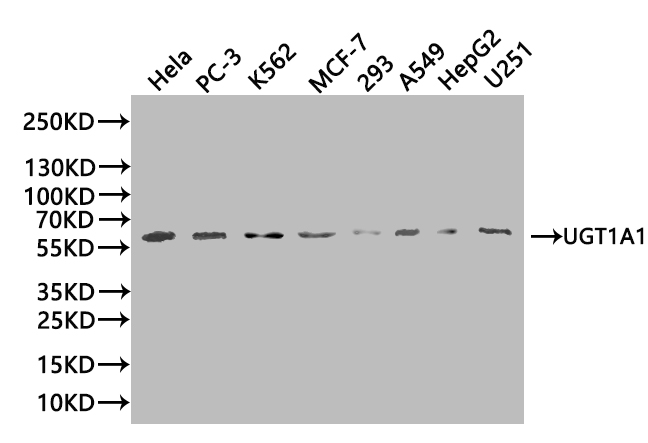
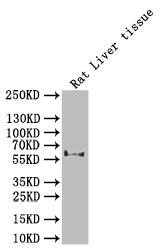
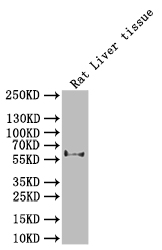
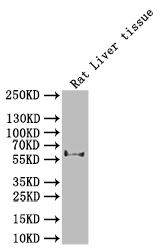
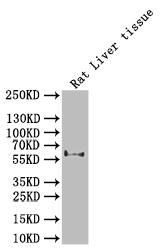
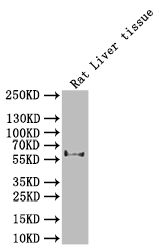
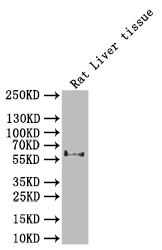
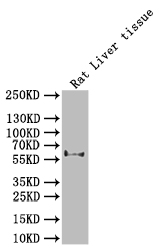
The antibody against UGT1A1 was raised in rabbit using the Recombinant Human UDP-glucuronosyltransferase 1-1 protein (395-482AA) as the immunogen. This antibody exists as a non-conjugated isotype IgG, purified by protein G with a purity greater than 95%. This antibody has been validated on ELISA, WB, IHC.

ADC-05825A

The antibody against UGT1A1 was raised in rabbit using the Recombinant Human UDP-glucuronosyltransferase 1-1 protein (395-482AA) as the immunogen. This antibody exists as a non-conjugated isotype IgG, purified by protein G with a purity greater than 95%. This antibody has been validated on ELISA, WB, IHC.

$299.00

Number
Order Exclusive Products Now

Request a Quote
High Purity LevelsPrecision and ReliabilityCustomization Options

Specifications


Cat.No ADC-05825A ClonalityPolyclonal
Host SpeciesRabbitTarget NameUGT1A1
Target SynonymsBILIRUBIN/PHENOL antibody; URIDINE DIPHOSPHATE GLYCOSYLTRANSFERASE 1 antibody; URIDINE DIPHOSPHATE GLYCOSYLTRANSFERASE 1 FAMILY, POLYPEPTIDE A1 antibodyFormLiquid
Species ReactivityHuman, RatIsotypeIgG
Storage Buffer0.01M PBS, 0.03% Proclin 300; Constituents: 50% Glycerol, PH 7.4Purification Method>95%, Protein G purified
ConjugateNon-conjugatedApplicationELISA, IHC, WB
StorageUpon receipt

Immunogen Information


Immunogen DescriptionRecombinant Human UDP-glucuronosyltransferase 1-1 protein (395-482AA)Target SpeciesHuman
Immunogen SequenceComplete sequences for the immunogen, target protein, and peptides are available upon request.Uniprot IDP22309
Background Information
  • Uniprot Id

    P22309

  • Target Species

    Human

  • Target Name

    UGT1A1

  • Target Full Name

    UDP-glucuronosyltransferase 1A1

  • Target Function

    UDP-glucuronosyltransferase (UGT) that catalyzes phase II biotransformation reactions in which lipophilic substrates are conjugated with glucuronic acid to increase the metabolite's water solubility, thereby facilitating excretion into either the urine or bile. Essential for the elimination and detoxification of drugs, xenobiotics and endogenous compounds. Catalyzes the glucuronidation of endogenous estrogen hormones such as estradiol, estrone and estriol. Involved in the glucuronidation of bilirubin, a degradation product occurring in the normal catabolic pathway that breaks down heme in vertebrates. Also catalyzes the glucuronidation the isoflavones genistein, daidzein, glycitein, formononetin, biochanin A and prunetin, which are phytoestrogens with anticancer and cardiovascular properties. Involved in the glucuronidation of the AGTR1 angiotensin receptor antagonist losartan, a drug which can inhibit the effect of angiotensin II. Involved in the biotransformation of 7-ethyl-10-hydroxycamptothecin (SN-38), the pharmacologically active metabolite of the anticancer drug irinotecan.; Lacks UGT glucuronidation activity but acts as a negative regulator of isoform 1.

  • Target Involvement

    Gilbert syndrome (GILBS); Transient familial neonatal hyperbilirubinemia (HBLRTFN); Crigler-Najjar syndrome 1 (CN1); Crigler-Najjar syndrome 2 (CN2)

  • Target Subcellular Location

    Endoplasmic reticulum membrane; Single-pass membrane protein. Cytoplasm, perinuclear region.

  • Target Protein Families

    UDP-glycosyltransferase family

  • Target Tissue Specificity

    [Isoform 1]: Expressed in liver, colon and small intestine. Not expressed in kidney, esophagus and skin.; [Isoform 2]: Expressed in liver, colon, small intestine and kidney. Not expressed in esophagus and skin.

  • Target Research Area

    Metabolism

  • Target Synonyms

    BILIQTL1; Bilirubin specific UDPGT isozyme 1; bilirubin UDP glucuronosyltransferase 1 1; bilirubin UDP glucuronosyltransferase isozyme 1; Bilirubin-specific UDPGT isozyme 1; EC 2.4.1.17; GNT1; HUG BR1; HUG-BR1; HUGBR1; PHENOL/BILIRUBIN UDP GLUCURONOSYLTRANSFERASE; UD11_HUMAN; UDP glucuronosyltransferase 1 1 [Precursor]; UDP glucuronosyltransferase 1 family polypeptide A1; UDP glucuronosyltransferase 1A1; UDP GLYCOSYLTRANSFERASE 1; UDP-glucuronosyltransferase 1-1; UDP-glucuronosyltransferase 1-A; UDP-glucuronosyltransferase 1A1; UDPGT; UDPGT 1-1; UGT 1A; UGT-1A; UGT1; UGT1 01; UGT1*1; UGT1-01; UGT1.1; UGT1A; Ugt1a1; URIDINE DIPHOSPHATE GLUCURONOSYLTRANSFERASE, BILIRUBIN/PHENOL; URIDINE DIPHOSPHATE GLYCOSYLTRANSFERASE 1; URIDINE DIPHOSPHATE GLYCOSYLTRANSFERASE 1 FAMILY, POLYPEPTIDE A1

  • Target Background

    This gene encodes a UDP-glucuronosyltransferase, an enzyme of the glucuronidation pathway that transforms small lipophilic molecules, such as steroids, bilirubin, hormones, and drugs, into water-soluble, excretable metabolites. This gene is part of a complex locus that encodes several UDP-glucuronosyltransferases. The locus includes thirteen unique alternate first exons followed by four common exons. Four of the alternate first exons are considered pseudogenes. Each of the remaining nine 5' exons may be spliced to the four common exons, resulting in nine proteins with different N-termini and identical C-termini. Each first exon encodes the substrate binding site, and is regulated by its own promoter. The preferred substrate of this enzyme is bilirubin, although it also has moderate activity with simple phenols, flavones, and C18 steroids. Mutations in this gene result in Crigler-Najjar syndromes types I and II and in Gilbert syndrome.

Inquire Rabbit anti-Human UGT1A1 Polyclonal Antibody Now


AbTriva respects your privacy and protects your personal data in accordance with AbTriva. For more information, please see our data protection statement. *

Notification