-
Chinese (Simplified)
-
English
-
German
-
Korean
-
Spanish
Chinese (Simplified)
English
German
Korean
Spanish
Sign up for an account to enjoy easy online shopping and instant order tracking.
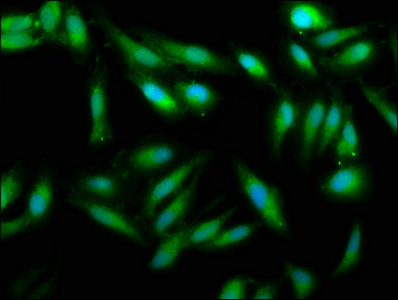
The antibody against UMPS was raised in rabbit using the Recombinant Human Uridine 5\'-monophosphate synthase protein (314-444AA) as the immunogen. This antibody exists as a non-conjugated isotype IgG, purified by protein G with a purity greater than 95%. This antibody has been validated on ELISA, IHC, IF.
The antibody against UMPS was raised in rabbit using the Recombinant Human Uridine 5\’-monophosphate synthase protein (314-444AA) as the immunogen. This antibody exists as a non-conjugated isotype IgG, purified by protein G with a purity greater than 95%. This antibody has been validated on ELISA, IHC, IF.
$299.00
| Cat.No | ADC-06578A | Clonality | Polyclonal |
|---|---|---|---|
| Host Species | Rabbit | Target Name | UMPS |
| Form | Liquid | Species Reactivity | Human |
| Isotype | IgG | Storage Buffer | 0.01M PBS, 0.03% Proclin 300; Constituents: 50% Glycerol, PH 7.4 |
| Purification Method | >95%, Protein G purified | Conjugate | Non-conjugated |
| Application | ELISA, IF, IHC | Storage | Upon receipt |
| Immunogen Description | Recombinant Human Uridine 5'-monophosphate synthase protein (314-444AA) | Target Species | Human |
|---|---|---|---|
| Immunogen Sequence | Complete sequences for the immunogen, target protein, and peptides are available upon request. | Uniprot ID | P11172 |
Uniprot Id
P11172
Target Species
Human
Target Name
UMPS
Target Full Name
Uridine 5'-monophosphate synthase
Target Involvement
Orotic aciduria 1 (ORAC1)
Target Protein Families
Purine/pyrimidine phosphoribosyltransferase family; OMP decarboxylase family
Target Synonyms
OPRT; UMPS
Target Background
This gene encodes a uridine 5'-monophosphate synthase. The encoded protein is a bifunctional enzyme that catalyzes the final two steps of the de novo pyrimidine biosynthetic pathway. The first reaction is carried out by the N-terminal enzyme orotate phosphoribosyltransferase which converts orotic acid to orotidine-5'-monophosphate. The terminal reaction is carried out by the C-terminal enzyme OMP decarboxylase which converts orotidine-5'-monophosphate to uridine monophosphate. Defects in this gene are the cause of hereditary orotic aciduria. Alternate splicing results in multiple transcript variants.
Notification