-
Chinese (Simplified)
-
English
-
German
-
Korean
-
Spanish
Chinese (Simplified)
English
German
Korean
Spanish
Sign up for an account to enjoy easy online shopping and instant order tracking.
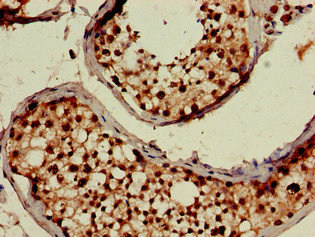
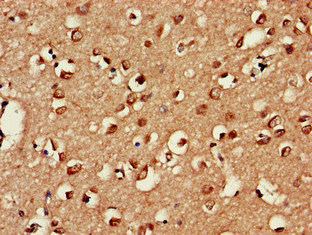
The antibody against USP18 was raised in rabbit using the Recombinant Human Ubl carboxyl-terminal hydrolase 18 protein (18-118AA) as the immunogen. This antibody exists as a non-conjugated isotype IgG, purified by protein G with a purity greater than 95%. This antibody has been validated on ELISA, WB, IHC, IF.
$299.00
| Cat.No | ADC-10018A | Clonality | Polyclonal |
|---|---|---|---|
| Host Species | Rabbit | Target Name | USP18 |
| Form | Liquid | Species Reactivity | Human, Mouse |
| Isotype | IgG | Storage Buffer | 0.01M PBS, 0.03% Proclin 300; Constituents: 50% Glycerol, PH 7.4 |
| Purification Method | >95%, Protein G purified | Conjugate | Non-conjugated |
| Application | ELISA, IF, IHC, WB | Storage | Upon receipt |
| Immunogen Description | Recombinant Human Ubl carboxyl-terminal hydrolase 18 protein (18-118AA) | Target Species | Human |
|---|---|---|---|
| Immunogen Sequence | Complete sequences for the immunogen, target protein, and peptides are available upon request. | Uniprot ID | Q9UMW8 |
Uniprot Id
Q9UMW8
Target Species
Human
Target Name
USP18
Target Full Name
Ubl carboxyl-terminal hydrolase 18
Target Function
Involved in the negative regulation of the inflammatory response triggered by type I interferon. Upon recruitment by STAT2 to the type I IFN receptor subunit IFNAR2 interferes with the assembly of the ternary interferon-IFNAR1-IFNAR2 complex and acts as a negative regulator of the type I IFN signaling pathway. Also regulates protein ISGylation. Can efficiently cleave only ISG15 fusions including native ISG15 conjugates linked via isopeptide bonds. Necessary to maintain a critical cellular balance of ISG15-conjugated proteins in both healthy and stressed organisms.; Has enzymatic activity similar to isoform 1 and interferes with type I interferon signaling. Major deISGylation enzyme for nuclear proteins.
Target Involvement
Pseudo-TORCH syndrome 2 (PTORCH2)
Target Subcellular Location
[Isoform 1]: Cytoplasm.; [Isoform 2]: Nucleus. Cytoplasm.
Target Protein Families
Peptidase C19 family
Target Research Area
Cell Biology
Target Synonyms
43 kDa ISG15 specific protease; 43 kDa ISG15-specific protease; EC 3.1.2.; hUBP43; Interferon Stimulated Gene 43 kD; ISG15 Specific Processing Protease; ISG15-specific-processing protease; ISG43; Ubiquitin Specific Peptidase 18; Ubiquitin Specific Protease 18 43 kD; Ubiquitin Specific Protease 18; Ubl carboxyl terminal hydrolase 18; Ubl carboxyl-terminal hydrolase 18; Ubl thioesterase 18; Ubl thiolesterase 18; Ubp15; UBP18_HUMAN; USP18
Target Background
The protein encoded by this gene belongs to the ubiquitin-specific proteases (UBP) family of enzymes that cleave ubiquitin from ubiquitinated protein substrates. It is highly expressed in liver and thymus, and is localized to the nucleus. This protein efficiently cleaves only ISG15 (a ubiquitin-like protein) fusions, and deletion of this gene in mice results in a massive increase of ISG15 conjugates in tissues, indicating that this protein is a major ISG15-specific protease. Mice lacking this gene are also hypersensitive to interferon, suggesting a function of this protein in downregulating interferon responses, independent of its isopeptidase activity towards ISG15.
Notification