• Contact info@abtriva.com for inquiries and orders.
  • Chinese (Simplified)

  • English

  • German

  • Korean

  • Spanish

United States (English / $ USD)

Rabbit anti-Human USP19 Polyclonal Antibody

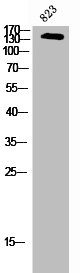
The antibody against USP19 was raised in rabbit using the Synthesized peptide derived from the Internal region of Human USP19. as the immunogen. This antibody exists as a non-conjugated isotype IgG. The antibody was affinity-purified from rabbit antiserum by affinity-chromatography using epitope-specific immunogen. This antibody has been validated on WB, IHC, ELISA.

ADC-36552A

The antibody against USP19 was raised in rabbit using the Synthesized peptide derived from the Internal region of Human USP19. as the immunogen. This antibody exists as a non-conjugated isotype IgG. The antibody was affinity-purified from rabbit antiserum by affinity-chromatography using epitope-specific immunogen. This antibody has been validated on WB, IHC, ELISA.

$167.00

Number
Order Exclusive Products Now

Request a Quote
High Purity LevelsPrecision and ReliabilityCustomization Options

Specifications


Cat.No ADC-36552A ClonalityPolyclonal
Host SpeciesRabbitTarget NameUSP19
FormLiquidSpecies ReactivityHuman, Mouse, Rat
IsotypeIgGStorage Buffer0.5% BSA and 0.02% sodium azide., Liquid in PBS containing 50% glycerol
Purification MethodThe antibody was affinity-purified from rabbit antiserum by affinity-chromatography using epitope-specific immunogen.ConjugateNon-conjugated
ApplicationELISA, IHC, WBStorageUpon receipt

Immunogen Information


Immunogen DescriptionSynthesized peptide derived from the Internal region of Human USP19.Target SpeciesHuman
Immunogen SequenceComplete sequences for the immunogen, target protein, and peptides are available upon request.Uniprot IDO94966
Background Information
  • Uniprot Id

    O94966

  • Target Species

    Human

  • Target Name

    USP19

  • Target Full Name

    Ubiquitin carboxyl-terminal hydrolase 19

  • Target Function

    Deubiquitinating enzyme that regulates the degradation of various proteins. Deubiquitinates and prevents proteasomal degradation of RNF123 which in turn stimulates CDKN1B ubiquitin-dependent degradation thereby playing a role in cell proliferation. Involved in decreased protein synthesis in atrophying skeletal muscle. Modulates transcription of major myofibrillar proteins. Also involved in turnover of endoplasmic-reticulum-associated degradation (ERAD) substrates. Regulates the stability of BIRC2/c-IAP1 and BIRC3/c-IAP2 by preventing their ubiquitination. Required for cells to mount an appropriate response to hypoxia and rescues HIF1A from degradation in a non-catalytic manner. Plays an important role in 17 beta-estradiol (E2)-inhibited myogenesis. Decreases the levels of ubiquitinated proteins during skeletal muscle formation and acts to repress myogenesis. Exhibits a preference towards 'Lys-63'-linked ubiquitin chains.

  • Target Subcellular Location

    Endoplasmic reticulum membrane; Single-pass membrane protein.

  • Target Protein Families

    Peptidase C19 family

  • Target Synonyms

    8430421I07Rik; AI047774; Deubiquitinating enzyme 19; Ubiquitin carboxyl terminal hydrolase 19; Ubiquitin carboxyl-terminal hydrolase 19; Ubiquitin specific peptidase 19; Ubiquitin specific processing protease 19; Ubiquitin specific protease 19; Ubiquitin thioesterase 19; Ubiquitin thiolesterase 19; Ubiquitin-specific-processing protease 19; UBP19_HUMAN; Usp19; Zinc finger MYND domain containing protein 9; Zinc finger MYND domain-containing protein 9; ZMYND9

  • Target Background

    Protein ubiquitination controls many intracellular processes, including cell cycle progression, transcriptional activation, and signal transduction. This dynamic process, involving ubiquitin conjugating enzymes and deubiquitinating enzymes, adds and removes ubiquitin. Deubiquitinating enzymes are cysteine proteases that specifically cleave ubiquitin from ubiquitin-conjugated protein substrates. This protein is a ubiquitin protein ligase and plays a role in muscle wasting. Alternatively spliced transcript variants encoding different isoforms have been found for this gene.

Inquire Rabbit anti-Human USP19 Polyclonal Antibody Now


AbTriva respects your privacy and protects your personal data in accordance with AbTriva. For more information, please see our data protection statement. *

Notification