-
Chinese (Simplified)
-
English
-
German
-
Korean
-
Spanish
Chinese (Simplified)
English
German
Korean
Spanish
Sign up for an account to enjoy easy online shopping and instant order tracking.
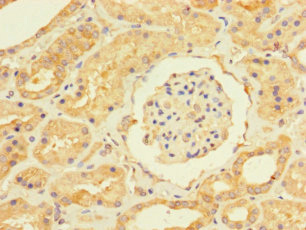
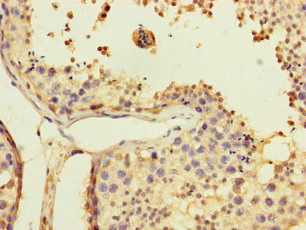
The antibody against USP5 was raised in rabbit using the Recombinant Human Ubiquitin carboxyl-terminal hydrolase 5 protein (201-500AA) as the immunogen. This antibody exists as a non-conjugated isotype IgG, purified by protein G with a purity greater than 95%. This antibody has been validated on ELISA, WB, IHC.
$299.00
| Cat.No | ADC-21130A | Clonality | Polyclonal |
|---|---|---|---|
| Host Species | Rabbit | Target Name | USP5 |
| Form | Liquid | Species Reactivity | Human, Mouse |
| Isotype | IgG | Storage Buffer | 0.01M PBS, 0.03% Proclin 300; Constituents: 50% Glycerol, PH 7.4 |
| Purification Method | >95%, Protein G purified | Conjugate | Non-conjugated |
| Application | ELISA, IHC, WB | Storage | Upon receipt |
| Immunogen Description | Recombinant Human Ubiquitin carboxyl-terminal hydrolase 5 protein (201-500AA) | Target Species | Human |
|---|---|---|---|
| Immunogen Sequence | Complete sequences for the immunogen, target protein, and peptides are available upon request. | Uniprot ID | P45974 |
Uniprot Id
P45974
Target Species
Human
Target Name
USP5
Target Full Name
Ubiquitin carboxyl-terminal hydrolase 5
Target Function
Cleaves linear and branched multiubiquitin polymers with a marked preference for branched polymers. Involved in unanchored 'Lys-48'-linked polyubiquitin disassembly. Binds linear and 'Lys-63'-linked polyubiquitin with a lower affinity. Knock-down of USP5 causes the accumulation of p53/TP53 and an increase in p53/TP53 transcriptional activity because the unanchored polyubiquitin that accumulates is able to compete with ubiquitinated p53/TP53 but not with MDM2 for proteasomal recognition.
Target Protein Families
Peptidase C19 family
Target Synonyms
Deubiquitinating enzyme 5; Isopeptidase T; ISOT 1; ISOT; Ubiquitin carboxyl-terminal hydrolase 5; Ubiquitin isopeptidase T; Ubiquitin specific peptidase 5 (isopeptidase T); Ubiquitin specific peptidase 5; Ubiquitin specific processing protease 5; Ubiquitin specific protease 5 (isopeptidase T); Ubiquitin specific protease 5 (ubiquitin isopeptidase T); Ubiquitin thioesterase 5; Ubiquitin thiolesterase 5; Ubiquitin-specific-processing protease 5; UBP5_HUMAN; Usp5
Target Background
Ubiquitin (see MIM 191339)-dependent proteolysis is a complex pathway of protein metabolism implicated in such diverse cellular functions as maintenance of chromatin structure, receptor function, and degradation of abnormal proteins. A late step of the process involves disassembly of the polyubiquitin chains on degraded proteins into ubiquitin monomers. USP5 disassembles branched polyubiquitin chains by a sequential exo mechanism, starting at the proximal end of the chain (Wilkinson et al., 1995 [PubMed 7578059]).
Notification