• Contact info@abtriva.com for inquiries and orders.
  • Chinese (Simplified)

  • English

  • German

  • Korean

  • Spanish

United States (English / $ USD)

Rabbit anti-Human VRK1 Polyclonal Antibody

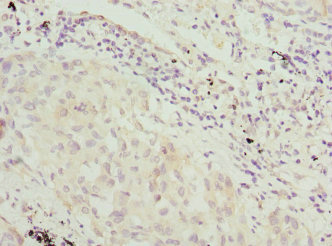
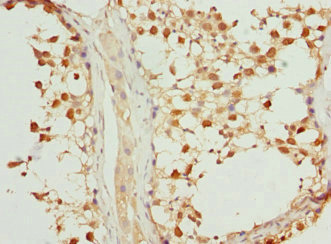
The antibody against VRK1 was raised in rabbit using the Recombinant Human Serine/threonine-protein kinase VRK1 protein (257-396AA) as the immunogen. This antibody exists as a non-conjugated isotype IgG, Antigen affinity purified. This antibody has been validated on ELISA, WB, IHC.

ADC-16942A

The antibody against VRK1 was raised in rabbit using the Recombinant Human Serine/threonine-protein kinase VRK1 protein (257-396AA) as the immunogen. This antibody exists as a non-conjugated isotype IgG, Antigen affinity purified. This antibody has been validated on ELISA, WB, IHC.

$299.00

Number
Order Exclusive Products Now

Request a Quote
High Purity LevelsPrecision and ReliabilityCustomization Options

Specifications


Cat.No ADC-16942A ClonalityPolyclonal
Host SpeciesRabbitTarget NameVRK1
FormLiquidSpecies ReactivityHuman
IsotypeIgGStorage Buffer50% Glycerol, PBS with 0.02% sodium azide, pH7.3.
Purification MethodAntigen affinity purifiedConjugateNon-conjugated
ApplicationELISA, IHC, WBStorageUpon receipt

Immunogen Information


Immunogen DescriptionRecombinant Human Serine/threonine-protein kinase VRK1 protein (257-396AA)Target SpeciesHuman
Immunogen SequenceComplete sequences for the immunogen, target protein, and peptides are available upon request.Uniprot IDQ99986
Background Information
  • Uniprot Id

    Q99986

  • Target Species

    Human

  • Target Name

    VRK1

  • Target Full Name

    Serine/threonine-protein kinase VRK1

  • Target Function

    Serine/threonine kinase involved in Golgi disassembly during the cell cycle: following phosphorylation by PLK3 during mitosis, required to induce Golgi fragmentation. Acts by mediating phosphorylation of downstream target protein. Phosphorylates 'Thr-18' of p53/TP53 and may thereby prevent the interaction between p53/TP53 and MDM2. Phosphorylates casein and histone H3. Phosphorylates BANF1: disrupts its ability to bind DNA, reduces its binding to LEM domain-containing proteins and causes its relocalization from the nucleus to the cytoplasm. Phosphorylates ATF2 which activates its transcriptional activity.

  • Target Involvement

    Pontocerebellar hypoplasia 1A (PCH1A)

  • Target Subcellular Location

    Cytoplasm. Nucleus. Cytoplasm, cytoskeleton, spindle. Note=Dispersed throughout the cell but not located on mitotic spindle or chromatids during mitosis.

  • Target Protein Families

    Protein kinase superfamily, CK1 Ser/Thr protein kinase family, VRK subfamily

  • Target Tissue Specificity

    Widely expressed. Highly expressed in fetal liver, testis and thymus.

  • Target Synonyms

    MGC117401; MGC138280; MGC142070; PCH1; PCH1A; Serine/threonine protein kinase VRK1; Serine/threonine-protein kinase VRK1; Vaccinia related kinase 1; Vaccinia virus B1R related kinase 1; Vaccinia-related kinase 1; VRK1; VRK1_HUMAN

  • Target Background

    This gene encodes a member of the vaccinia-related kinase (VRK) family of serine/threonine protein kinases. This gene is widely expressed in human tissues and has increased expression in actively dividing cells, such as those in testis, thymus, fetal liver, and carcinomas. Its protein localizes to the nucleus and has been shown to promote the stability and nuclear accumulation of a transcriptionally active p53 molecule and, in vitro, to phosphorylate Thr18 of p53 and reduce p53 ubiquitination. This gene, therefore, may regulate cell proliferation. This protein also phosphorylates histone, casein, and the transcription factors ATF2 (activating transcription factor 2) and c-JUN.

Inquire Rabbit anti-Human VRK1 Polyclonal Antibody Now


AbTriva respects your privacy and protects your personal data in accordance with AbTriva. For more information, please see our data protection statement. *

Notification