-
Chinese (Simplified)
-
English
-
German
-
Korean
-
Spanish
Chinese (Simplified)
English
German
Korean
Spanish
Sign up for an account to enjoy easy online shopping and instant order tracking.
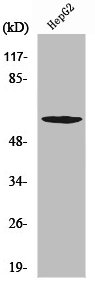
The antibody against WAS was raised in rabbit using the Synthesized peptide derived from Human WASP around the non-phosphorylation site of Y290. as the immunogen. This antibody exists as a non-conjugated isotype IgG. The antibody was affinity-purified from rabbit antiserum by affinity-chromatography using epitope-specific immunogen. This antibody has been validated on WB, IHC, ELISA.
$167.00
| Cat.No | ADC-37373A | Clonality | Polyclonal |
|---|---|---|---|
| Host Species | Rabbit | Target Name | WAS |
| Form | Liquid | Species Reactivity | Human, Mouse |
| Isotype | IgG | Storage Buffer | 0.5% BSA and 0.02% sodium azide., Liquid in PBS containing 50% glycerol |
| Purification Method | The antibody was affinity-purified from rabbit antiserum by affinity-chromatography using epitope-specific immunogen. | Conjugate | Non-conjugated |
| Application | ELISA, IHC, WB | Storage | Upon receipt |
| Immunogen Description | Synthesized peptide derived from Human WASP around the non-phosphorylation site of Y290. | Target Species | Human |
|---|---|---|---|
| Immunogen Sequence | Complete sequences for the immunogen, target protein, and peptides are available upon request. | Uniprot ID | P42768 |
Uniprot Id
P42768
Target Species
Human
Target Name
WAS
Target Full Name
Actin nucleation-promoting factor WAS
Target Function
Effector protein for Rho-type GTPases that regulates actin filament reorganization via its interaction with the Arp2/3 complex. Important for efficient actin polymerization. Possible regulator of lymphocyte and platelet function. Mediates actin filament reorganization and the formation of actin pedestals upon infection by pathogenic bacteria. In addition to its role in the cytoplasmic cytoskeleton, also promotes actin polymerization in the nucleus, thereby regulating gene transcription and repair of damaged DNA. Promotes homologous recombination (HR) repair in response to DNA damage by promoting nuclear actin polymerization, leading to drive motility of double-strand breaks (DSBs).
Target Involvement
Wiskott-Aldrich syndrome (WAS); Thrombocytopenia 1 (THC1); Neutropenia, severe congenital, X-linked (XLN)
Target Subcellular Location
Cytoplasm, cytoskeleton. Nucleus.
Target Tissue Specificity
Expressed predominantly in the thymus. Also found, to a much lesser extent, in the spleen.
Target Research Area
Signal Transduction
Target Synonyms
Eczema thrombocytopenia; IMD2; SCNX; THC; THC1; Thrombocytopenia 1 (X linked); U42471; Was; WASp; WASP_HUMAN; Wiskott Aldrich syndrome (eczema thrombocytopenia); Wiskott Aldrich syndrome; Wiskott Aldrich syndrome protein; Wiskott-Aldrich syndrome protein
Target Background
The Wiskott-Aldrich syndrome (WAS) family of proteins share similar domain structure, and are involved in transduction of signals from receptors on the cell surface to the actin cytoskeleton. The presence of a number of different motifs suggests that they are regulated by a number of different stimuli, and interact with multiple proteins. Recent studies have demonstrated that these proteins, directly or indirectly, associate with the small GTPase, Cdc42, known to regulate formation of actin filaments, and the cytoskeletal organizing complex, Arp2/3. Wiskott-Aldrich syndrome is a rare, inherited, X-linked, recessive disease characterized by immune dysregulation and microthrombocytopenia, and is caused by mutations in the WAS gene. The WAS gene product is a cytoplasmic protein, expressed exclusively in hematopoietic cells, which show signalling and cytoskeletal abnormalities in WAS patients. A transcript variant arising as a result of alternative promoter usage, and containing a different 5' UTR sequence, has been described, however, its full-length nature is not known.
Notification