• Contact info@abtriva.com for inquiries and orders.
  • Chinese (Simplified)

  • English

  • German

  • Korean

  • Spanish

United States (English / $ USD)

PDCD1 Recombinant Monoclonal Antibody

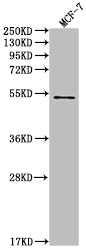
The recombinant antibody against PDCD1 was produced using a synthesized peptide derived from human PD1 as the immunogen. This antibody exists as a non-conjugated isotype Rabbit IgG, Affinity-chromatography purified. This antibody has been validated on ELISA, WB, IHC.

ADC-56961A

The recombinant antibody against PDCD1 was produced using a synthesized peptide derived from human PD1 as the immunogen. This antibody exists as a non-conjugated isotype Rabbit IgG, Affinity-chromatography purified. This antibody has been validated on ELISA, WB, IHC.

$350.00

Number
Order Exclusive Products Now

Request a Quote
High Purity LevelsPrecision and ReliabilityCustomization Options

Specifications


Cat.No ADC-56961A ClonalityMonoclonal
Target NamePDCD1Target SynonymsPD1, PDCD1, Programmed cell death protein 1 (Protein PD-1) (hPD-1) (CD antigen CD279)
FormLiquidSpecies ReactivityHuman
IsotypeRabbit IgGStorage BufferPH 7.4, 0.02% sodium azide and 50% glycerol., 150mM NaCl, Rabbit IgG in phosphate buffered saline
Purification MethodAffinity-chromatography purifiedConjugateNon-conjugated
ApplicationELISA, IHC, WBStorageUpon receipt

Immunogen Information


Immunogen DescriptionA synthesized peptide derived from human PD1Target SpeciesHuman
Immunogen SequenceComplete sequences for the immunogen, target protein, and peptides are available upon request.Uniprot IDQ15116
Background Information
  • Uniprot Id

    Q15116

  • Target Species

    Human

  • Target Name

    PDCD1

  • Target Full Name

    Programmed cell death protein 1

  • Target Function

    Inhibitory receptor on antigen activated T-cells that plays a critical role in induction and maintenance of immune tolerance to self. Delivers inhibitory signals upon binding to ligands CD274/PDCD1L1 and CD273/PDCD1LG2. Following T-cell receptor (TCR) engagement, PDCD1 associates with CD3-TCR in the immunological synapse and directly inhibits T-cell activation. Suppresses T-cell activation through the recruitment of PTPN11/SHP-2: following ligand-binding, PDCD1 is phosphorylated within the ITSM motif, leading to the recruitment of the protein tyrosine phosphatase PTPN11/SHP-2 that mediates dephosphorylation of key TCR proximal signaling molecules, such as ZAP70, PRKCQ/PKCtheta and CD247/CD3zeta.; The PDCD1-mediated inhibitory pathway is exploited by tumors to attenuate anti-tumor immunity and escape destruction by the immune system, thereby facilitating tumor survival. The interaction with CD274/PDCD1L1 inhibits cytotoxic T lymphocytes (CTLs) effector function. The blockage of the PDCD1-mediated pathway results in the reversal of the exhausted T-cell phenotype and the normalization of the anti-tumor response, providing a rationale for cancer immunotherapy.

  • Target Involvement

    Systemic lupus erythematosus 2 (SLEB2)

  • Target Subcellular Location

    Cell membrane; Single-pass type I membrane protein.

  • Target Research Area

    Cell Biology

  • Target Synonyms

    CD279; CD279 antigen; hPD 1; hPD l; hPD-1; hSLE1; PD 1; PD-1; PD1; PDCD 1; PDCD1; PDCD1_HUMAN; Programmed cell death 1 ; Programmed cell death 1 protein; Programmed cell death protein 1; Protein PD 1; Protein PD-1; SLEB2 ; Systemic lupus erythematosus susceptibility 2

  • Target Background

    Programmed cell death protein 1 (PDCD1) is an immune-inhibitory receptor expressed in activated T cells; it is involved in the regulation of T-cell functions, including those of effector CD8+ T cells. In addition, this protein can also promote the differentiation of CD4+ T cells into T regulatory cells. PDCD1 is expressed in many types of tumors including melanomas, and has demonstrated to play a role in anti-tumor immunity. Moreover, this protein has been shown to be involved in safeguarding against autoimmunity, however, it can also contribute to the inhibition of effective anti-tumor and anti-microbial immunity.

Inquire PDCD1 Recombinant Monoclonal Antibody Now


AbTriva respects your privacy and protects your personal data in accordance with AbTriva. For more information, please see our data protection statement. *

Notification