• Contact info@abtriva.com for inquiries and orders.
  • Chinese (Simplified)

  • English

  • German

  • Korean

  • Spanish

United States (English / $ USD)

Rabbit lpp Polyclonal Antibody

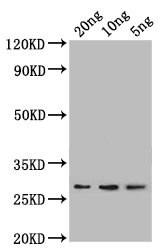
The antibody against lpp was raised in rabbit using the Recombinant Escherichia coli (strain K12) lpp protein (21-78aa) as the immunogen. This antibody exists as a non-conjugated isotype IgG, Affinity-chromatography purified. This antibody has been validated on ELISA, WB.

ADC-55346A

The antibody against lpp was raised in rabbit using the Recombinant Escherichia coli (strain K12) lpp protein (21-78aa) as the immunogen. This antibody exists as a non-conjugated isotype IgG, Affinity-chromatography purified. This antibody has been validated on ELISA, WB.

$299.00

Number
Order Exclusive Products Now

Request a Quote
High Purity LevelsPrecision and ReliabilityCustomization Options

Specifications


Cat.No ADC-55346A ClonalityPolyclonal
Host SpeciesRabbitTarget NameLPP
Target SynonymsMajor outer membrane prolipoprotein Lpp [Cleaved into: Major outer membrane lipoprotein Lpp (Braun lipoprotein) (Murein-lipoprotein)] lpp mlpA mulI b1677 JW1667FormLiquid
Species ReactivityEscherichia coli (strain K12)IsotypeIgG
Storage Buffer0.01M PBS, 0.03% Proclin 300; Constituents: 50% Glycerol, PH 7.4Purification MethodAffinity-chromatography purified
ConjugateNon-conjugatedApplicationELISA, WB
StorageUpon receipt

Immunogen Information


Immunogen DescriptionRecombinant Escherichia coli (strain K12) lpp protein (21-78aa)Target SpeciesEscherichia coli (strain K12)
Immunogen SequenceComplete sequences for the immunogen, target protein, and peptides are available upon request.Uniprot IDP69776
Background Information
  • Uniprot Id

    P69776

  • Target Species

    E.coli

  • Target Name

    LPP

  • Target Function

    An outer membrane lipoprotein that controls the distance between the inner and outer membranes; adding residues to Lpp increases the width of the periplasm. The only protein known to be covalently linked to the peptidoglycan network (PGN). Also non-covalently binds the PGN. The link between the cell outer membrane and PGN contributes to the maintenance of the structural and functional integrity of the cell envelope, and maintains the correct distance between the PGN and the outer membrane. The most abundant cellular protein in terms of copy number, there can be up to one million Lpp molecules per cell. About one-third of Lpp is bound to the PGN (called bound or periplasmic) the rest is called free or transmembrane. The 'free' form can be surface labeled by membrane impermeable agents and so must cross the outer membrane; it is thought that this transmembrane form is still anchored in the inner leaflet of the outer membrane. Modeling suggests that non-covalent binding of OmpA (from the outer membrane) and TolR (from the inner membrane) to peptidoglycan maintains the position of the cell wall in the periplasm, holding it approximately equidistant from both the inner and outer membranes. Trimeric Lpp controls the width of the periplasm, adjusts its tilt angle to accommodate to the available space, and can compensate in part for an absence of OmpA (Probable). The role of the cell surface-exposed, free form (transmembrane) of Lpp is unknown.

  • Target Subcellular Location

    Cell outer membrane; Lipid-anchor; Periplasmic side. Secreted, cell wall; Peptidoglycan-anchor. Cell outer membrane; Lipid-anchor; Extracellular side.

  • Target Protein Families

    Lpp family

Inquire Rabbit lpp Polyclonal Antibody Now


AbTriva respects your privacy and protects your personal data in accordance with AbTriva. For more information, please see our data protection statement. *

Notification