• Contact info@abtriva.com for inquiries and orders.
  • Chinese (Simplified)

  • English

  • German

  • Korean

  • Spanish

United States (English / $ USD)

VDAC1 Recombinant Monoclonal Antibody

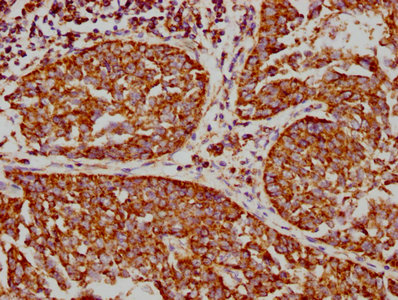
The recombinant antibody against VDAC1 was produced using a synthesized peptide derived from human VDAC1 as the immunogen. This antibody exists as a non-conjugated isotype Rabbit IgG, Affinity-chromatography purified. This antibody has been validated on ELISA, WB, IHC.

ADC-56180A

The recombinant antibody against VDAC1 was produced using a synthesized peptide derived from human VDAC1 as the immunogen. This antibody exists as a non-conjugated isotype Rabbit IgG, Affinity-chromatography purified. This antibody has been validated on ELISA, WB, IHC.

$350.00

Number
Order Exclusive Products Now

Request a Quote
High Purity LevelsPrecision and ReliabilityCustomization Options

Specifications


Cat.No ADC-56180A ClonalityMonoclonal
Target NameVDAC1FormLiquid
Species ReactivityHuman, Mouse, RatIsotypeRabbit IgG
Storage BufferPH 7.4, 0.02% sodium azide and 50% glycerol., 150mM NaCl, Rabbit IgG in phosphate buffered salinePurification MethodAffinity-chromatography purified
ConjugateNon-conjugatedApplicationELISA, IHC, WB
StorageUpon receipt

Immunogen Information


Immunogen DescriptionA synthesized peptide derived from human VDAC1Target SpeciesHuman
Immunogen SequenceComplete sequences for the immunogen, target protein, and peptides are available upon request.Uniprot IDP21796
Background Information
  • Uniprot Id

    P21796

  • Target Species

    Human

  • Target Name

    VDAC1

  • Target Full Name

    Non-selective voltage-gated ion channel VDAC1

  • Target Function

    Forms a channel through the mitochondrial outer membrane and also the plasma membrane. The channel at the outer mitochondrial membrane allows diffusion of small hydrophilic molecules; in the plasma membrane it is involved in cell volume regulation and apoptosis. It adopts an open conformation at low or zero membrane potential and a closed conformation at potentials above 30-40 mV. The open state has a weak anion selectivity whereas the closed state is cation-selective. Binds various signaling molecules, including the sphingolipid ceramide, the phospholipid phosphatidylcholine, and the sterol cholesterol. In depolarized mitochondria, acts downstream of PRKN and PINK1 to promote mitophagy or prevent apoptosis; polyubiquitination by PRKN promotes mitophagy, while monoubiquitination by PRKN decreases mitochondrial calcium influx which ultimately inhibits apoptosis. May participate in the formation of the permeability transition pore complex (PTPC) responsible for the release of mitochondrial products that triggers apoptosis. May mediate ATP export from cells.

  • Target Subcellular Location

    Mitochondrion outer membrane; Multi-pass membrane protein. Cell membrane; Multi-pass membrane protein. Membrane raft; Multi-pass membrane protein.

  • Target Protein Families

    Eukaryotic mitochondrial porin family

  • Target Tissue Specificity

    Expressed in erythrocytes (at protein level). Expressed in heart, liver and skeletal muscle.

  • Target Synonyms

    N2441; OMP2; POR1; hVDAC1; MGC111064; Mitochondrial Porin; Outer mitochondrial membrane protein porin 1; Plasmalemmal porin; Porin 31HL; Porin 31HM; VDAC; VDAC-1; Vdac1; VDAC1_HUMAN; Voltage dependent anion channel 1; Voltage dependent anion selective channel protein 1; Voltage-dependent anion-selective channel protein 1; YNL055C; YNL2441C

  • Target Background

    This gene encodes a voltage-dependent anion channel protein that is a major component of the outer mitochondrial membrane. The encoded protein facilitates the exchange of metabolites and ions across the outer mitochondrial membrane and may regulate mitochondrial functions. This protein also forms channels in the plasma membrane and may be involved in transmembrane electron transport. Alternate splicing results in multiple transcript variants. Multiple pseudogenes of this gene are found on chromosomes 1, 2 3, 6, 9, 12, X and Y.

Inquire VDAC1 Recombinant Monoclonal Antibody Now


AbTriva respects your privacy and protects your personal data in accordance with AbTriva. For more information, please see our data protection statement. *

Notification